
A few years ago, during a particularly frustrating week, I was standing over my mom’s dining table venting to her. She sat patiently, stitching on a large textile she’d been piecing together quietly for some time. She had been making quilts for a while after learning a stitching practice called Kawandi.
I vented; she stitched. I cried; she stitched. Eventually, she threaded a needle and handed it to me, gesturing for me to help while we talked. In a few sentences, she conveyed the general practice she was working in, and I began to stitch from the outside in, moving in small increments. As we sat piecing together her large quilt, the knots in my brain began to untangle themselves. My shoulders relaxed.
I returned to a feeling from when I was very small when I would color for hours, humming like a machine as time slipped by. I think this is what they call a flow state. We flowed for a while, and then my mom encouraged me further.
"Start a piece of your own."
I was reluctant, thinking of the piles of unfinished projects I already had stored away. But I gave in and began my own spiral. We talked about hobbies and friendship. We found pieces of clothing I cared for deeply but had outgrown, and we found new places for them, in the quilt.
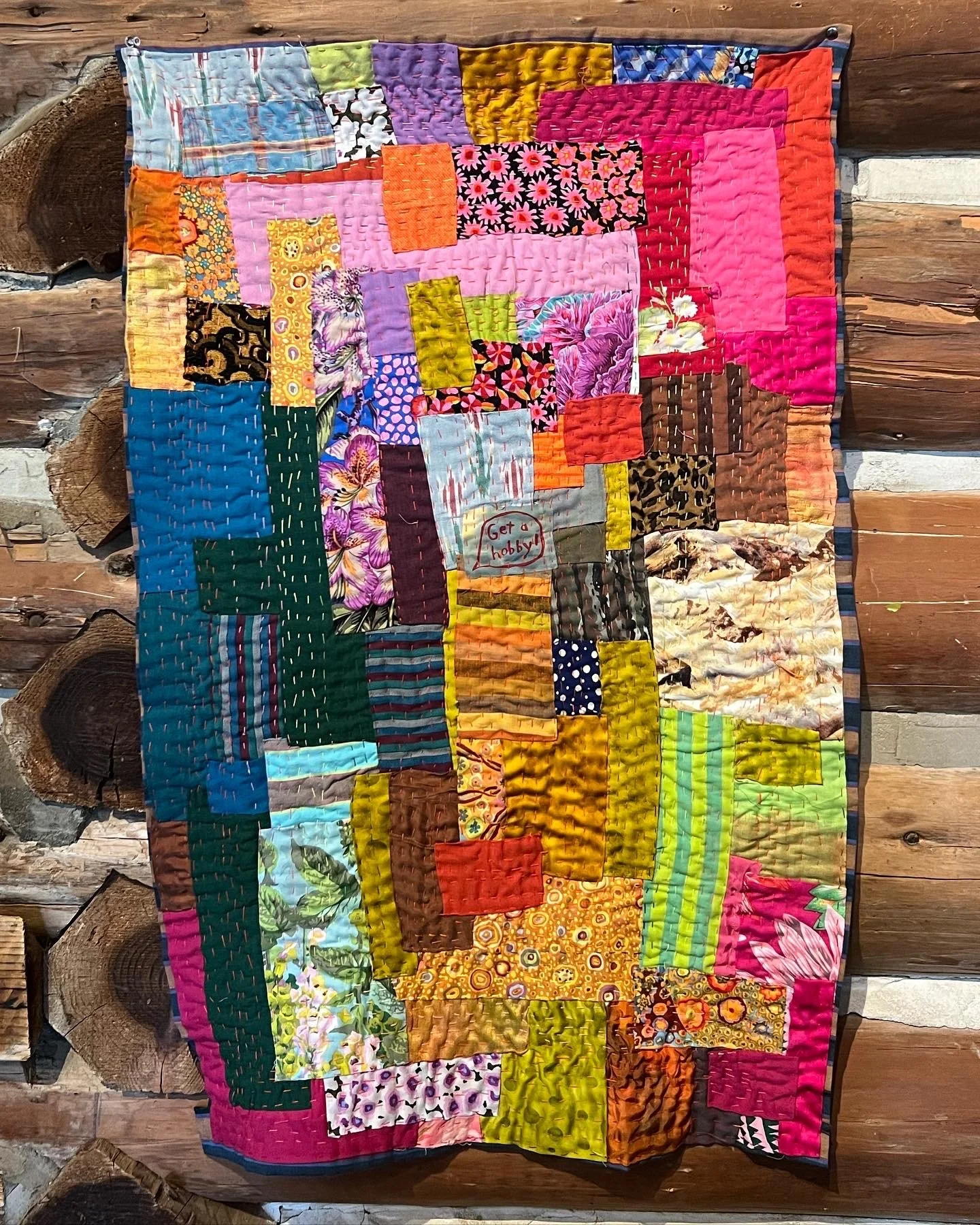
Months later, I started The Artist’s Way book club, as any blocked artist must eventually do. We met in the grass at the public library. I laid out the quilts my mom had made, and we chatted and drank tea. I brought a craft for us to try. Sometimes we talked about artist dates or morning pages, but mostly we sat in the sun and admired the quilts.
“I want to make one of these,” was a shared sentiment.
I imagined my mother teaching us all how to start our own small quilts on a book club afternoon, but at that time, she was in the middle of a huge cross-country move and was spending less and less time in the home I had always known to be hers. How could I pin this woman down to teach all my friends to do this thing?
Then I remembered the few sentences of direction she had shared with me, and how quickly I dropped in when she encouraged it. Fuck it, I thought. I can share what I know. If they need more information than I have, we can go from there. So I invited my group to start a quilt together. That way, no one had to buy anything or take anything home if they didn’t fall in love with the practice as I had.
We each chose a scrap and got to work, stitching circularly from the outside in, folding over our edges, reminding each other not to rush into designing the entire piece at once. And thus, a group quilt was born.
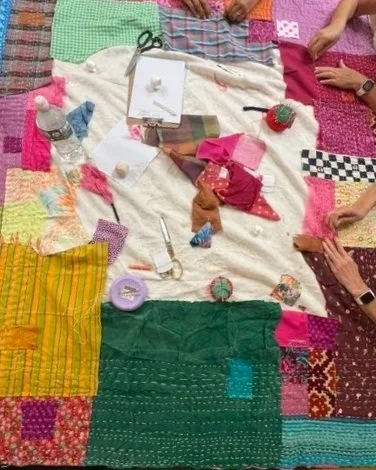
Over the last three years, I’ve started and finished seven quilts with various groups of friends and acquaintances. One thing has proven true: no one is a stranger after you’ve sat for and stitched together for a while.
Themes appear and reappear. We talk about the lifecycle of textiles, natural fibers versus others. Sometimes people have never picked up a needle before, and it feels awkward at first. Other times, people share the exact moment their grandmother handed them a needlepoint project.
This January, my mother and I collaborated on our biggest quilt yet. We tailored the group quilt to fit across two large tables and set it up for a Vogue Knitting Live event in Times Square.
Over 100 people stitched with us that last weekend of January. People who had traveled from near and far to connect with other knitters and crocheters, And there we were, with our BIG QUILT, inviting people in. No experience needed.
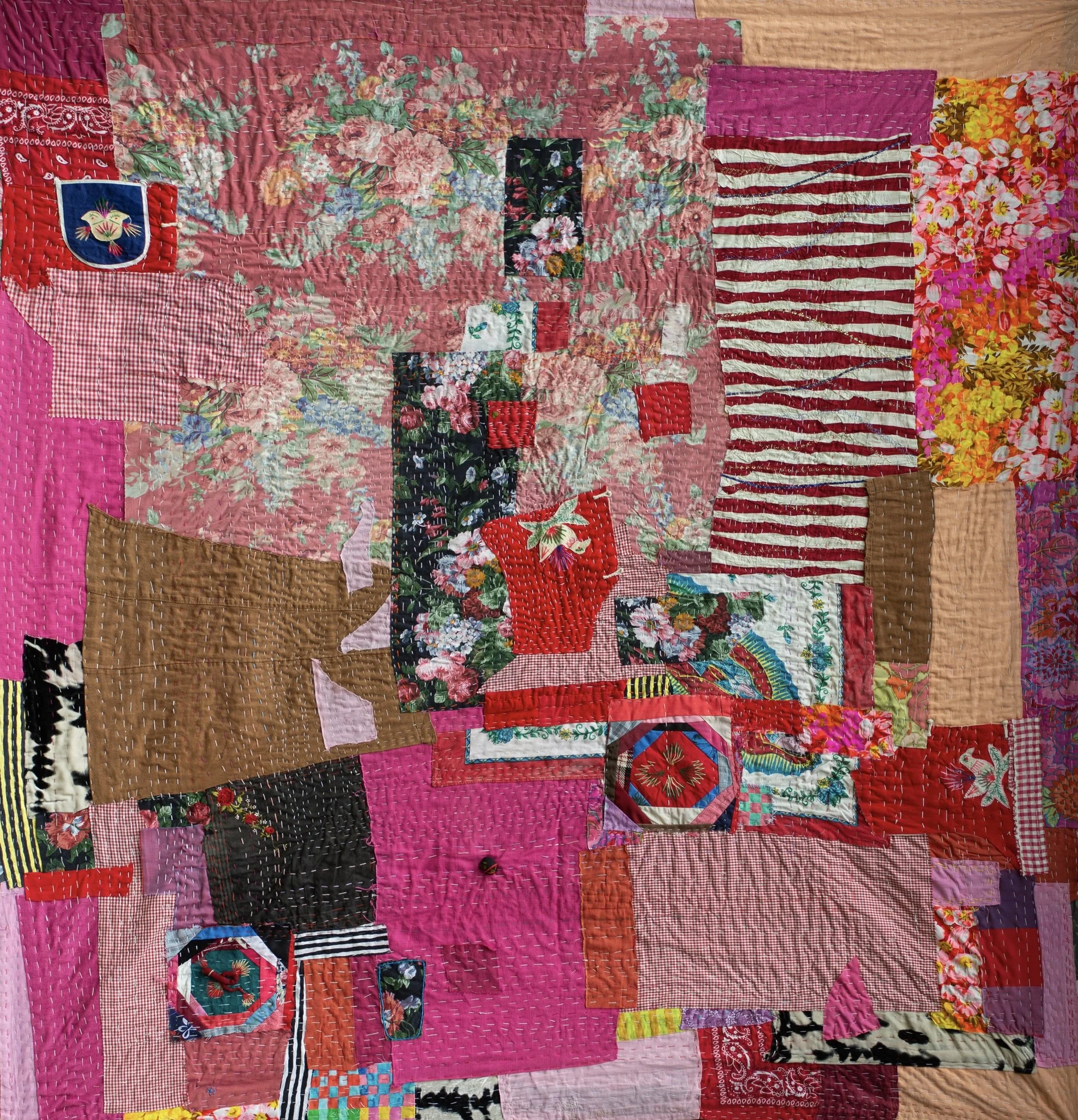
We watched friendships form. We met wonderfully hilarious, brilliant new friends of our own. We got bagel recommendations. We watched people stop in their tracks to admire the table overflowing with hands and scraps layered together, to blanket Times Square with love. To Blanket the World With Love.
This project feels expansive and important in a moment when it’s easy to forget the good that is truly woven into the fabric of this world. My version of group quilting is informed by everything my mother taught me and when she stitches on a collaborative piece it is informed by everything I have shared with her. This work is cyclical and circular in many ways and the metaphors are endless.
And when you bring this practice to your community it will transform in a whole new way. We look forward to the next time we will be able to stitch with you, and share the way this project moves us forward.